
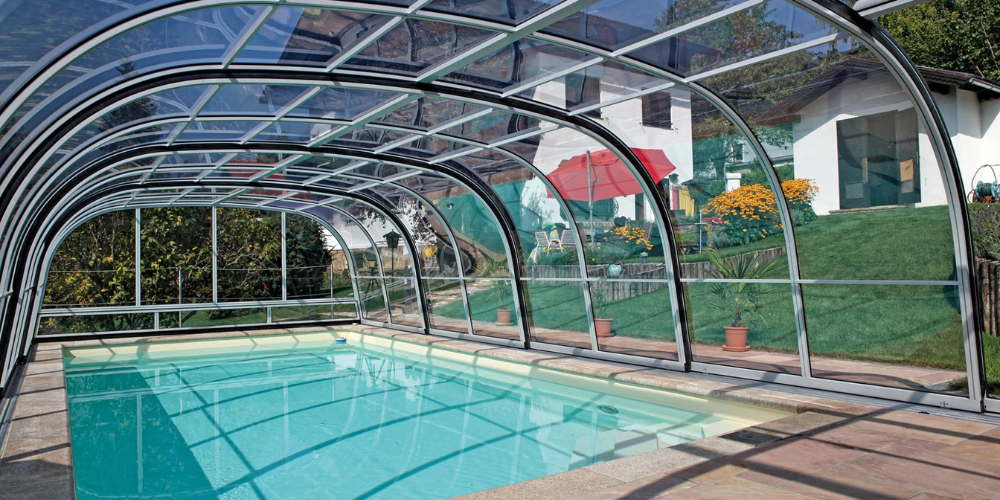
Polycarbonate vs glass: which material for a shelter?

When considering the purchase of a pool enclosure, choosing the glazing material is a crucial step. Two main options are generally available: glass and polycarbonate. Each material has specific characteristics that influence durability, aesthetics, insulation, and, of course, the overall cost of your installation.
Polycarbonate: the ally of performance and lightness
Polycarbonate is a thermoplastic material known for its lightness and strength. It offers excellent impact resistance – 250 times stronger than glass – and withstands weathering very well. It is particularly recommended for pool enclosures because of:
Its ability to block UV rays while allowing natural light to pass through.
Its lightness makes it easy to open, close or move the modules.
Its thermal insulation properties make it ideal for keeping water at a constant temperature.
Its more affordable price, especially for custom projects.
Glass: high-end aesthetics but technical constraints
Glass, especially tempered glass, is often praised for its aesthetic appeal. It brings undeniable elegance to any space and offers perfect transparency. However, it also has some limitations:
It is heavier, which complicates the structure and installation.
It is more fragile in the event of a violent impact, despite a good level of safety.
It generally costs more than polycarbonate.
Our advice
For residential or family use, polycarbonate often represents the best compromise between aesthetics, performance, and budget. Glass remains an attractive option for architectural or high-end projects, provided its weight and maintenance requirements are carefully considered.